

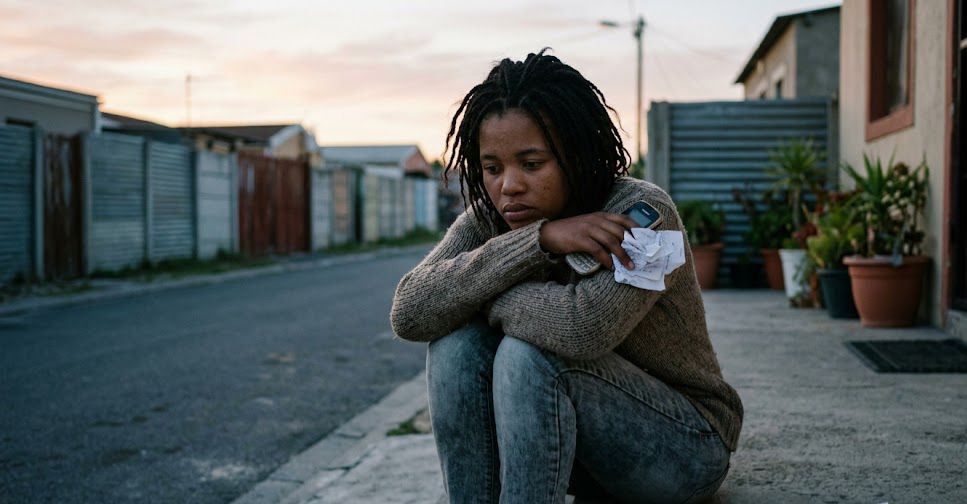

In South Africa, youth unemployment is more than just a statistic. For thousands of young people, the inability to find work is taking a heavy toll on mental health, identity, and self-worth.
The stress of financial instability is compounded by anxiety, depression, and the pressure to survive emotionally while navigating a challenging job market.
It permeates every aspect of daily life, particularly within the context of South African communities. Many unemployed individuals withdraw from their peers and community.
The societal pressure to secure employment creates immense guilt, leading people to mask their struggles to avoid judgment.
For unemployed youth rejection can be crushing which can lead to depression. The stress of financial instability is compounded by anxiety, depression, and the pressure to survive emotionally while navigating a challenging job market.
“If you’re broke, you’re broken” says Mia-Mae, a 20 year old from Cape Town. She further added that unemployment is not just financial; it is deeply emotional.
“You’re left just trying to survive each month. That alone is exhausting,” she says.
“Money really does make the world go around, and without it, you’re left just trying to survive each month.”
Lack of support has affected her deeply. “Many of them had more support, like parents who could help them through school, guide them, or pay for extra help.”
Her self-esteem has suffered. “I’ve let myself go,” she says. “I used to want to be better, but now, looking for a job feels hopeless. It’s like nothing will ever change.”
Living alone without a steady income adds more pressure. “Nothing comes for free, and if you’re broke, you’re broken,” she says. “It’s hard to stay motivated when it feels like nothing
you do matters.”
She also feels judgment from others. “I feel like a disappointment, like I’m just surviving off other people’s money,” she shares.
Roshni Parbhoo-Seetha, Education Project Manager at SADAG, explains the emotional toll.
“Many young people describe feeling hopeless, overwhelmed, and stuck.
It can lead to burnout, anxiety, and even depression.” Shame and perceived failure make matters worse. “There’s this sense of failure. And when that’s paired with poverty or no support, it can even lead to suicidal thoughts.”
Registered counsellor Vanishaa Gordhan Narotam highlights anxiety and depression as common consequences. “There’s often a sense of constant worry about the future, which fuels anxiety. And deep feelings of sadness or hopelessness that can spiral into
depression,” she says.
Youth unemployment hovers near 44%, the emotional toll is severe. Studies show that over 60% of young people experience anxiety or depression, with 30% considering suicide.
Prolonged joblessness routinely triggers feelings of worthlessness, social isolation, and heightened substance abuse.
Behind each unread application and quiet day at home are young voices that dream, hope, and fight to be heard.