


By Boitumelo Morubane
Many township businesses are foreign-owned, and while they provide convenience to communities, recent videos of JMPD and law enforcement inspections have sparked serious public conversations.
Walk through any South African township and you will see spaza shops and convenience stores selling everything from airtime and phone chargers to snacks, cool drinks, and household essentials
Food Safety Concerns
People are asking important questions:
- Are these shops following proper health and safety regulations?
- Where exactly is stock being stored? Is it clean, legal or overcrowded backrooms?
- Do the sell expired or unlabelled products, especially to children?
- Lastly, are all business owners operating with the correct documentation and permits?
These concerns are not random or baseless. South Africans still mourn heartbreaking incident where children became seriously ill — and some tragically lost their lives — after allegedly consuming contaminated or improperly stored snacks bought from local shops. Recent food safety scares in township communities have only intensified these fears.
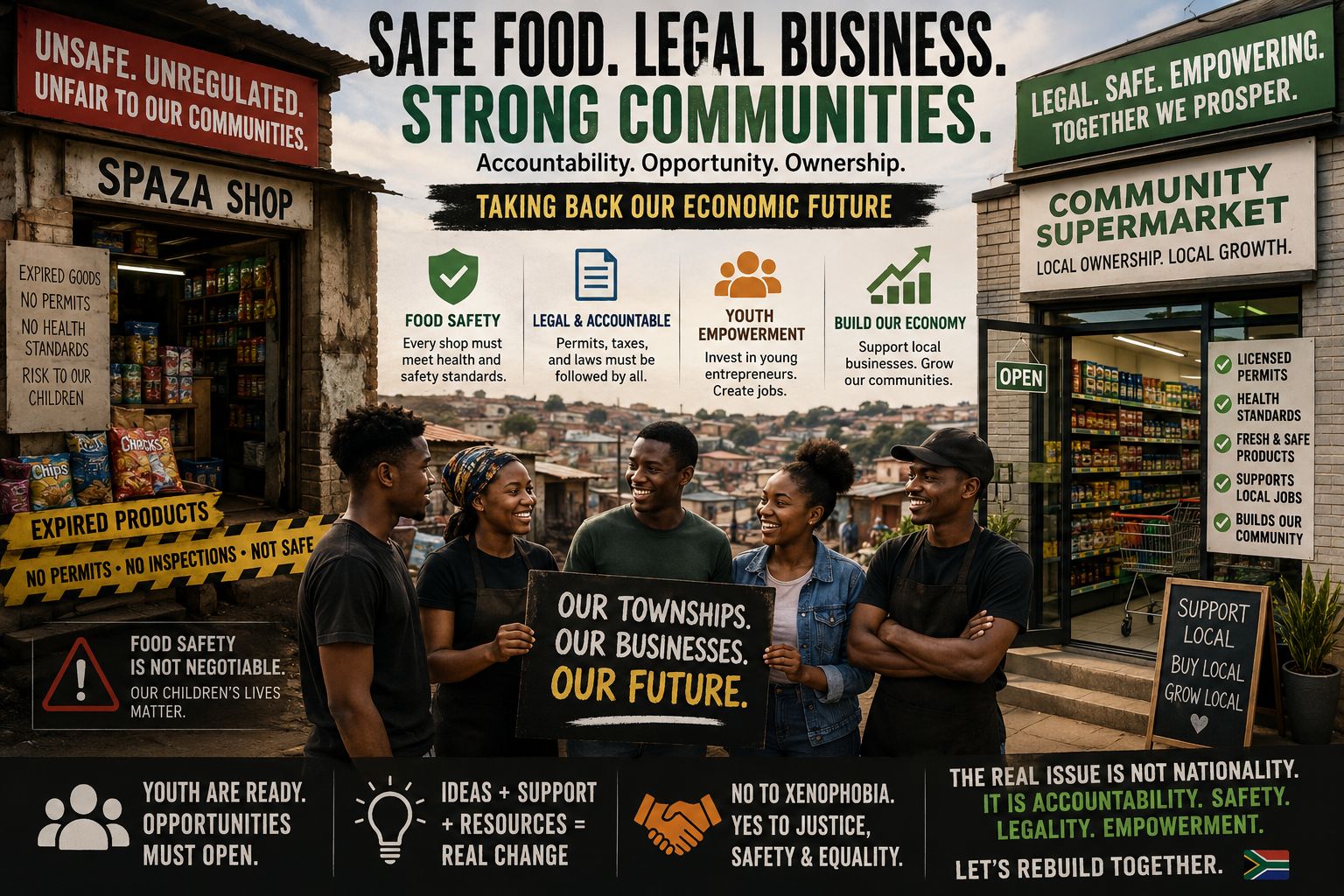
This conversation should never become about hatred or xenophobia. South Africa is built on dignity, diversity, and human rights. However, laws and regulations exist for a reason. Every business whether owned by South Africans or foreign nationals, should meet health standards, pay taxes, and operate legally.
Youth Unemployment and Economic Ownership
Beyond food safety concerns, these discussions have also highlighted a deeper economic challenge: the lack of meaningful economic participation among young South Africans.
South Africa’s youth unemployment crisis remains devastating. According to recent estimates, unemployment among people aged 18–24 remains above 60%, while the rate for those aged 25–34 remains significantly high as well. Millions of young people are sitting with ideas, ambition, and potential, but without meaningful economic opportunities.
Research has also shown that in many township areas, a significant percentage of spaza shops are owned by foreign nationals. Many of these businesses succeed through strong community networks, bulk buying systems, long working hours, and disciplined entrepreneurship. That hustle deserves recognition.
At the same time, many local entrepreneurs feel excluded from opportunities within their own communities. Young people are increasingly asking:
- Why is it still so difficult for township youth to access funding, mentorship, and business support?
- Why are so many young South Africans struggling to compete in sectors that serve their own communities daily?
These questions reflect growing frustration about economic ownership and access to opportunity in township economies.
Solutions
This moment should encourage serious action, especially among young people between the ages of 18 and 35.
Support Local and Legal Businesses
Buying from legal, community-based businesses helps circulate money within communities and creates opportunities for local entrepreneurs and workers.
Strengthen Accountability and Enforcement
- Government must enforce health inspections, food safety checks, immigration processes, and business regulations fairly and consistently. Corruption, selective enforcement, violence, and xenophobia should never be part of the solution.
Invest in Youth Entrepreneurship
South Africa needs more accessible startup funding, business education, mentorship programmes, and support systems aimed specifically at township entrepreneurs.
Imagine more township-owned supermarkets, tech repair stores, cafés, and convenience shops being successfully operated by young South Africans with proper support and resources.
South Africans deserve safe food, legal businesses, and genuine economic opportunities within their communities. The goal is not to chase anyone away, it is to create a fair and balanced environment where local entrepreneurs also have a real chance to thrive.
The real issue is not nationality. It is accountability, safety, legality, and economic empowerment.
Instead of only debating online, we should focus on rebuilding our communities through smart, lawful, and community-rooted businesses that create opportunities for future generations.
Report unsafe or expired food products to your local health authorities — protecting our communities starts with accountability. For reporting and more information, visit the links below.
Department Of Health: Home
National Consumer Commission: The National Consumer Commission (NCC)